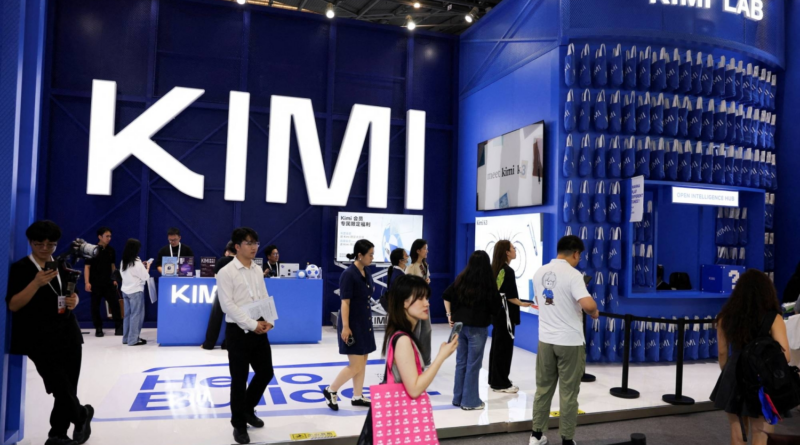
The GPU-Poor Geniuses: Inside the Kimi Team That Just Redrew the AI Frontier
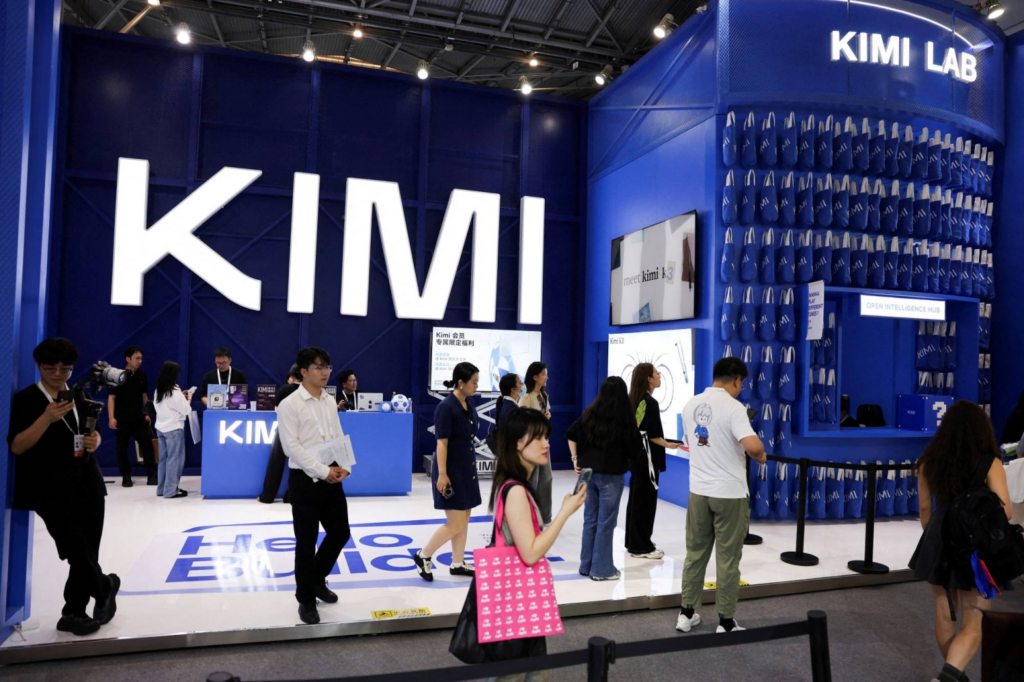
A Beijing startup running on a fraction of the compute available to OpenAI just dropped the first open model that genuinely belongs in the same sentence as Claude and GPT-5.6 — and they had to pause sign-ups two days later because their GPUs melted under the demand.
The Model Nobody Expected
On July 16, 2026, Moonshot AI released Kimi K3, a 2.8-trillion-parameter mixture-of-experts model. And yes, 2.8 trillion is a big number. But the number that actually matters is 16 — that’s how many of the model’s 896 experts fire per token, which means the thing you actually serve is sparse, not a monolithic beast. It runs on a 1-million-token context window, has native vision baked in, and comes with an always-on thinking mode that the team says produces its best results.
Most importantly, Moonshot promised to release the full model weights by July 27. If they follow through, Kimi K3 will become the largest open-weight model ever made available to the public. Not an API wrapper. Not a distilled student. The real thing.
“It is the world’s first open 3T-class model, designed for frontier intelligence across long-horizon coding, knowledge work, and reasoning,” the team wrote in their launch blog.
A Bullet Point That Changed the Mood
The clearest data point came from Arena, the blind human-preference platform run by LMSYS. Once the stealth checkpoint was unblinded, Kimi K3 debuted at number one on the Frontend Code Arena with 1,679 Elo points — ahead of Claude Fable 5 at 1,631 and GPT-5.6 Sol at 1,618. That’s a seventeen-place jump from its predecessor, Kimi K2.6, which sat at 18th. K3 took first place in six of seven frontend coding domains.
Across the broader evaluation landscape, AI analyst Nathan Lambert summarized the pecking order this way: Anthropic’s Claude Fable 5 still leads, followed by OpenAI’s GPT-5.6 Sol, then Kimi K3 in third — ahead of Grok 4.5, GLM 5.2, Meta’s Muse Spark 1.1, and Google’s Gemini Flash 3.5.
Artificial Analysis placed K3 at a score of 57.1 on its Intelligence Index v4.1, just 2.8 points behind Fable 5’s 59.9 and 1.8 behind Sol Max at 58.9. On coding benchmarks, K3 won Terminal-Bench 2.1 outright. On DeepSWE, it scored 67.3. On SWE Marathon — a long-horizon software engineering gauntlet that tests whether models can sustain a multi-hour engineering session — K3 went head-to-head with the best.
These are not participation-trophy placements. This is a model that belongs on stage with the two companies that have more money, more GPUs, and more time in the game than anyone else.
How They Built It
K3 is not a bigger version of K2. It’s a different architecture. The model is built on Kimi Delta Attention, or KDA — a hybrid linear attention mechanism the team first described in a paper last October — paired with something called Attention Residuals (AttnRes), which selectively retrieves representations across depth rather than accumulating them uniformly.
The sparsity is extreme: 16 active experts out of 896, managed by a Stable LatentMoE framework that uses Quantile Balancing to handle routing without heuristic updates or sensitive hyperparameters. For optimization, the team deployed Per-Head Muon, which extends the Muon optimizer by treating attention heads independently. Then they added Sigmoid Tanh Unit (SiTU) and Gated MLA for activation control and attention selectivity.
The payoff is what the team calls “an approximate 2.5× improvement in overall scaling efficiency compared to Kimi K2.” That is not marketing speak — it is the difference between burning your entire GPU budget on one training run and having enough left over to iterate.
K3 also applies quantization-aware training from the supervised fine-tuning stage onward, using MXFP4 weights with MXFP8 activations. The result is a model that can be served at $3 per million input tokens and $15 per million output tokens — and just $0.30 per million on a cache hit. By comparison, that is roughly 70% cheaper than the closed frontier models it competes against.
The Culture That Punches Above Its Weight Class
Nathan Lambert, a researcher at the Allen Institute for AI and former HuggingFace staffer, visited Moonshot’s offices in Beijing earlier this year as part of a tour of China’s leading AI labs. His account, published on his Interconnects newsletter, captures something that benchmark tables cannot.
“Meeting some of the core Kimi team on my trip to China, it was clear to me that they had incredible culture, some would say aura, and a freedom to express it — within the constraints of a GPU-limited environment,” Lambert wrote. “Where building models is so much of a scaling game, much of the ability to build a good model still comes down to individual execution, motivation, and expression. Having visited them, this result is less surprising.”
He added: “Having visited many AI companies, very few have a culture that you can immediately pick up like this.”
Then the detail that puts it all in perspective. Lambert recalled joking with Moonshot researchers about how much compute an average researcher at OpenAI might have access to — perhaps a few thousand H100-equivalent machines. “The researchers at Kimi were shocked,” he wrote. The gap between the resources available to Moonshot and those available to the American labs they are now competing with is not a percentage difference. It is an order-of-magnitude chasm.
And yet, here they are. “Moonshot AI is going toe to toe with Anthropic and OpenAI with far, far fewer resources,” Lambert concluded.
Two Days, Then a Compute Wall
The public agreed with the benchmarks. Within 48 hours of launch, Moonshot paused new consumer subscriptions. Demand had “pushed close to the limits of our current capacity,” the company announced on X. Their translation: “Our GPUs are feeling it.”
Existing subscribers were unaffected and the API remained live, but the pause was a blunt reminder of the asymmetry that defines this moment. Moonshot could build a frontier model with a fraction of the hardware available to its American rivals. But when it came time to serve that model to millions of users, the same constraint bit back immediately.
This is the paradox at the heart of China’s AI ascent. Because Chinese labs have far less inference demand than their American counterparts — adoption trends started later — a larger share of their compute can go to training. That structural quirk may help explain how a company with dramatically less total hardware can produce models that land so close to the frontier. It also explains why they hit a wall the moment everyone tried to use the thing at once.
What This Means for the Open-Weight Movement
Kimi K3 lands at a moment when the debate over open-weight models has never been louder. Dean Ball, a researcher at OpenAI, crystallized the economic argument in a widely-discussed post: “Open-weight models are inherently decelerationist, and I’m continually surprised to see the so-called ‘accelerationists’ so excited about open-weight models.”
His logic: open models collapse the margin potential of closed labs, which reduces profits available for reinvestment, which slows the pace of frontier progress. Lambert’s counterpoint is that open-weight models are accelerationist for AI diffusion across the economy — they make intelligence cheaper and more customizable, and that diffusion eventually compounds into something bigger, even if it starts slower.
The Chinese government appears to have picked its side. The same week as K3’s launch, Xi Jinping delivered a keynote at the World AI Conference in Shanghai and explicitly committed China’s AI ecosystem to open-source development and global diffusion. That commitment, coinciding with the release of the strongest open-weight model in history, is not subtle.
Meanwhile, according to Axios, the U.S. Commerce Department has considered adding Chinese AI labs to its Entity List. The White House has reportedly weighed executive orders that would require U.S. companies hosting Chinese models to guarantee security and accept liability for breaches. If those measures move forward, we would arrive at an asymmetric world: the best American models are closed and guardrailed, while the best Chinese models are open and downloadable anywhere with an internet connection.
The Real Story Is the People
Architecture papers and benchmark tables explain what happened. They do not fully explain why. The why, if Lambert’s reporting is any guide, lives in a Beijing office where researchers are doing more with less — because they have to, because the constraints forced them to be clever rather than flush, and because the culture gave them the freedom to express that cleverness in the work itself.
This is not a story about China catching up through imitation or distillation. “If adversarial distillation from the closed frontier models in the U.S. contributed, it is at most to a relatively small degree,” Lambert wrote. “Chinese companies are extremely good at building models in the same way the leading American companies are.”
The open-weight frontier is no longer hypothetical. It has a name, and it belongs to a team that had to pause sign-ups because too many people wanted what they built.