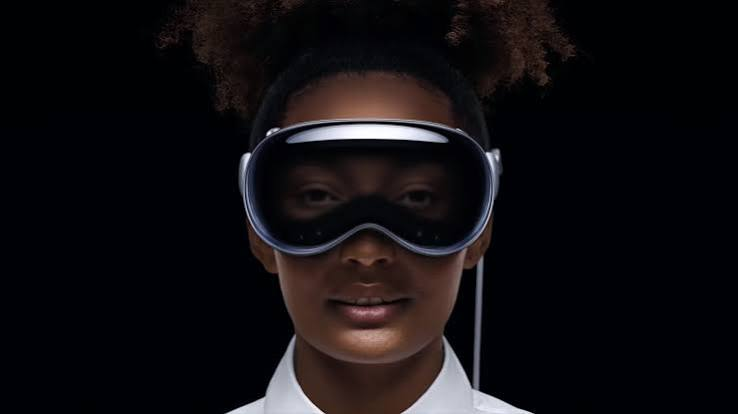
Apple Vision Pro, Two Years On: A Sales Flop That Surgeons Won’t Give Up
The $3,499 face-computer that was supposed to change everything has instead found its calling in places Apple never pitched — operating rooms, not living rooms.
The Numbers Tell a Brutal Story
When Apple launched the Vision Pro in February 2024, analysts projected the company could move one to two million units in the first year. Reality landed somewhere far south of that. According to IDC data cited by the Financial Times, Apple shipped roughly 390,000 units in 2024, its debut year. By the fourth quarter of 2025, that figure had cratered to an estimated 45,000 units — an 88% collapse that even an M5 chip refresh in October 2025 could not reverse.
Apple’s manufacturing partner Luxshare reportedly halted production entirely at the start of 2025 after fulfilling the initial run. The company also cut back its digital advertising spend for the headset, a quiet signal that Cupertino had begun to read the room. As the Financial Times report put it, the Vision Pro was trailing far behind iPhones, iPads, and MacBooks — products that sell in the millions each quarter.
Then, in a move that raised eyebrows across the industry, Apple increased the price. In June 2026 the base 256GB model jumped from $3,499 to $3,699, with the 1TB configuration climbing to $4,199. The device that was already too expensive for most people got even more expensive.
The Software Has Actually Gotten Good
For those who did buy in, the software story has improved dramatically. At WWDC 2025, Apple unveiled visionOS 26, which brought spatial widgets that anchor to your physical environment, dramatically more realistic Persona avatars, spatial scenes that add lifelike depth to photos, and — crucially for anyone hoping to play actual games — support for Sony’s PSVR2 Sense controllers.
A year later, visionOS 27 arrived with Siri AI and Visual Intelligence baked directly into the headset, letting the assistant respond to whatever you’re looking at, real or virtual. RealityKit gained physical space lighting, meaning virtual objects now cast light onto actual walls and surfaces. Spatial Mac previewing lets users peek at their Mac desktop floating in space before committing to the full virtual display.
Sam Byford, writing for his Multicore newsletter in January 2026, described picking up a used M2 Vision Pro well after launch. “I finally bought a Vision Pro,” he wrote, noting that the secondary market had made the original model accessible in a way the retail price never did. He found the experience genuinely compelling at the lower entry point — but that path requires being comfortable with a used, last-generation headset.
Meanwhile, in the Operating Room
While Apple was quietly scaling back production and marketing, surgeons were picking up the device and putting it to work in ways nobody at the original launch keynote described.
Dr. Eric Rosenberg, an ophthalmologist at SightMD in New York, performed the world’s first cataract surgery using Apple Vision Pro in October 2025. He has since completed hundreds of additional cases using ScopeXR, a surgical platform he co-developed that streams live feeds from 3D digital microscopes directly into the headset. The system also enables real-time remote collaboration — a senior surgeon can see exactly what the operating surgeon sees and offer guidance from anywhere.
“The Vision Pro has completely changed how I approach complex cases,” Rosenberg told AppleInsider. “The level of detail and the ability to collaborate in real time — it’s not a gimmick, it’s genuinely transformative.”
Sharp HealthCare in San Diego went further, launching the first IRB-approved clinical trial of Vision Pro in ocular microsurgery in March 2026 using a platform called ClearSurgery. The study, registered with ClinicalTrials.gov, formally evaluates the headset as a spatial computing display for cataract procedures — moving beyond anecdotal use toward structured clinical evidence.
It’s not just eyes. The device has been used in colonoscopies, shoulder arthroscopies, and minimally invasive general surgery. A paper published in Surgical Endoscopy documented the first U.S. series of minimally invasive general surgery cases performed with the Vision Pro. The authors reported that the headset provided an unobstructed view of the operative field, eliminating the need to divert attention to external monitors.
As one report from NeuralWired put it: “The operating rooms using it right now didn’t get the message, and they’re not slowing down.” At $3,499 — or even $3,699 — the Vision Pro is still the cheapest piece of equipment in most operating rooms.
Developers Are Showing Up, Slowly
The App Store for visionOS now hosts hundreds of native apps, though the ecosystem remains a fraction of what iOS or even iPadOS offers. A.R. Rahman, the two-time Oscar-winning composer, launched ARR Immersive in July 2026, an app that brings a decade of his immersive storytelling work to the headset. Indie developer Grant Hinkson brought his hand-tracking art experience CONNECTOME to Vision Pro, though he detailed significant pain points in getting the application approved and optimized.
At WWDC 2026, Apple’s developer sessions emphasized new APIs for enterprise, spatial accessories, and wide field-of-view video from action cameras. The tools are maturing. Whether the install base is large enough to justify the effort remains the open question.
The Cheaper Model Slips Further Away
The most sobering news for anyone hoping Apple would release a more affordable headset arrived in July 2026. Korean outlet The Elec reported that Samsung Display is winding down development of “G-VR,” a glass-substrate micro-OLED panel that was meant for a lower-cost Vision device. The project is expected to be formally terminated by September.
MacRumors and The Verge both picked up the report, with The Verge noting bluntly: “A cheaper Vision Pro might be even further out now — if it happens at all.” Macworld added that Apple appears to be prioritizing smart glasses development over creating a budget Vision Pro model. The expensive silicon-based OLEDoS displays in the current headset remain the single biggest cost barrier, and without a viable cheaper alternative, an affordable Vision device may not arrive until after 2028 — if ever.
So Where Does That Leave Things?
Two years after launch, the Vision Pro exists in a strange limbo. It is, by most accounts, the most technically impressive consumer headset ever built — and also one of Apple’s clearest commercial disappointments in years. Production has been scaled back, marketing has gone quiet, and the cheaper follow-up looks more distant than ever.
Yet in a handful of operating rooms across the country, the device is doing exactly what Apple’s early marketing promised: changing how people work. It just turns out those people are surgeons, not office workers dragging spreadsheets across their living rooms. Whether that niche is enough to sustain a product line is a question only Apple can answer.